

In the realm of music, scales are much more than a sequence of notes. They serve as the backbone for musical composition and offer a framework that opens up a world of creative possibilities. Understanding the function and significance of scales is crucial for anyone involved in music, whether composing, performing, or analyzing.
Understanding scales
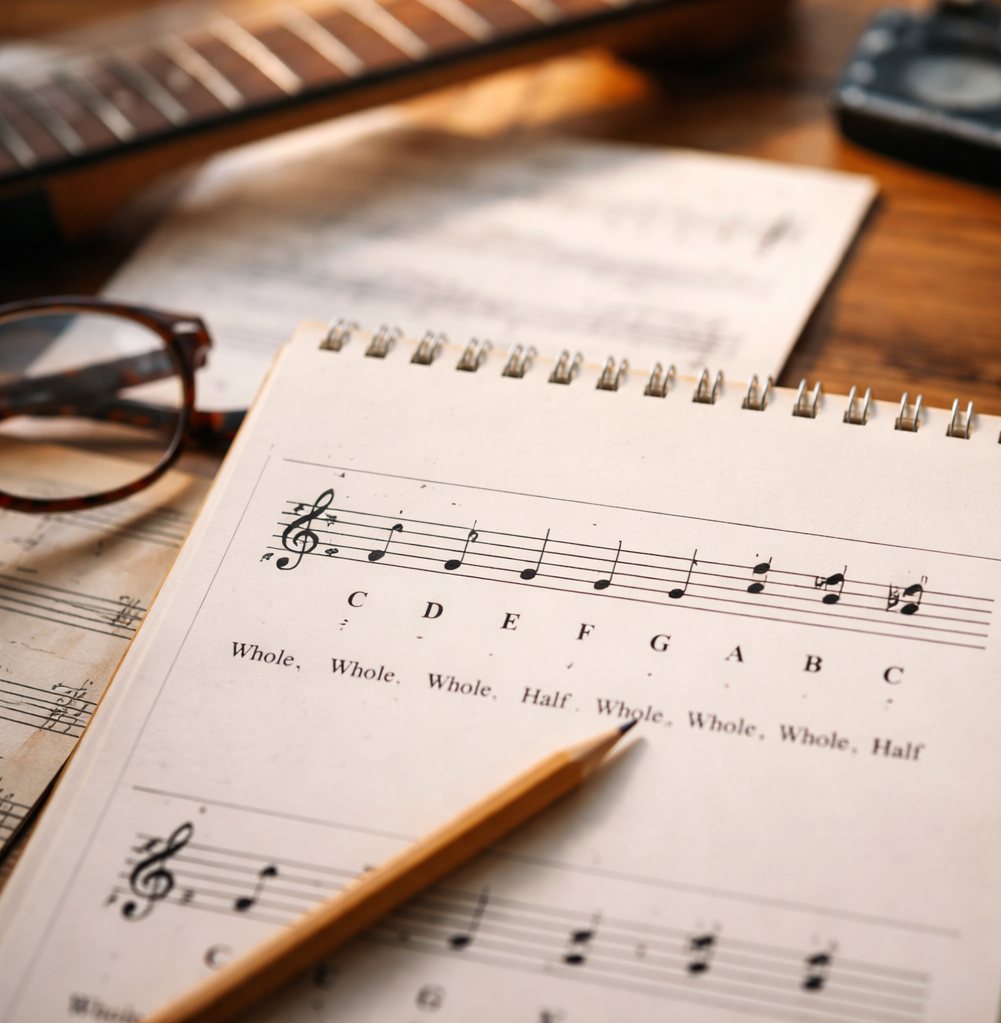
At its simplest, a scale is a collection of pitches arranged in ascending or descending order. The most basic scales, such as the major and minor, are foundational to Western music. These scales lay out the notes from which melodies and harmonies are formed. Each scale has its own unique sound and emotional flavor, influencing the mood of the music being created.
Setting the mood
A major scale generally exudes a bright and uplifting tone, while a minor scale tends to convey a more somber or introspective feel. These emotional cues make scales a powerful tool for composers aiming to evoke specific feelings in their listeners. For instance, a composer might choose a Dorian scale, which has a minor quality but with subtle differences, to invoke a sense of mystery or intrigue.
Building blocks for melody
Melodies often derive their structure from scales. A composer selects notes from a scale to construct a melody that feels cohesive and grounded. Think of scales as the canvas upon which musical ideas are painted. In improvisational contexts, such as jazz, musicians heavily rely on scales to navigate harmonic structures and create spontaneous melodies that fit seamlessly within a chord progression.
Constructing harmony
Harmony, too, has its roots in scales. By stacking notes from a scale in specific patterns, chords are formed. These chords then combine in progressions that offer both tension and resolution, forming the harmonic foundation of a piece. Understanding how scales contribute to harmony empowers musicians to predict and manipulate the emotional responses of their audience.
Exploring new frontiers
While major and minor scales dominate much of Western music, countless other scales from around the world offer fresh perspectives and sounds. The pentatonic scale, for instance, is prevalent in many cultures and provides a simple yet powerful basis for composition. More exotic scales, like the Hungarian minor or the Lydian dominant, challenge the norms of Western harmony and invite exploration into *new musical worlds*.
Theoretical implications
From a theoretical standpoint, scales serve as a gateway to understanding concepts like modulation, where a piece shifts from one key to another. By mastering scales, musicians can fluently navigate these shifts and expand their repertoire to include complex and fascinating pieces.
Breaking the rules
In the hands of a creative composer, scales are not limitations but invitations to experiment. Some of the most innovative compositions arise when traditional scales are twisted or combined in unexpected ways. By breaking free from conventional norms, musicians can push the boundaries of what is possible in music, leading to revolutionary styles and genres.
Scales are more than just a series of notes ; they are the lifeblood of musical composition. Whether used as a tool for setting mood, forming melodies, or constructing harmony, understanding scales is essential for any musician. With scales at their disposal, musicians possess the freedom to traverse the vast and varied landscape of musical expression.