

Within the expansive world of biological classification, tapirs find their niche in a fascinating diverse array of animals. Knowing how to classify tapirs in the animal kingdom can provide insights into their evolution, behavior, and conservation. Let’s take a structured look at these unique creatures and understand their place in the zoological hierarchy. The intricate details of their classification shed light on the multitudinous ways nature adapts and evolves, showcasing the remarkable variety of life on earth.
Understanding mammalian classification
Tapirs belong to the large and varied class of Mammalia. Like all mammals, tapirs are warm-blooded vertebrates characterized by the presence of mammary glands which produce milk, a feature crucial for the nourishment of their young. They possess other mammalian traits such as having a spinal column and fur or hair on their bodies. This fur provides not only warmth but also acts as a camouflaging mechanism, allowing tapirs to blend seamlessly into their natural surroundings and avoid predators more efficiently.
Order Perissodactyla
Delving deeper into classification, tapirs are placed within the order Perissodactyla, or odd-toed ungulates. This group is defined by animals that typically have an odd number of toes on their hind feet and a digestive system adapted to a fibrous plant-based diet. Relatives within this order include horses and rhinoceroses, each boasting unique adaptations. The distinct toe arrangement aids in swift movement through dense foliage and muddy terrains, where agility can mean the difference between survival and peril.
Family Tapiridae
Within Perissodactyla, tapirs are the sole members of the family Tapiridae. This family is characterized by stocky bodies, short legs, and long, flexible snouts. They are well-adapted to their respective environments, ranging from rainforests to grasslands. Their distinct snout, which is a highly evolved upper lip and nose, assists in both gathering foliage and navigating their habitat. These snouts can move in almost any direction, akin to an elephant’s trunk, hinting at the evolutionary parallels drawn from shared environmental pressures.
Species diversity among tapirs
The family Tapiridae comprises several distinct species : the Malayan tapir, the Brazilian tapir, Baird’s tapir, and the mountain tapir. Each species adapts to specific environmental niches. For example, while the Malayan tapir, the largest of the tapir species, is easily identifiable by its distinctive black and white pattern, it also showcases a surprising aquatic prowess. These tapirs can often be seen swimming in rivers, using water bodies as refuge zones. The Brazilian tapir, on the other hand, is more uniformly colored and resides primarily in the Amazon Basin, where it plays a pivotal role in seed dispersion, directly impacting forest ecology.
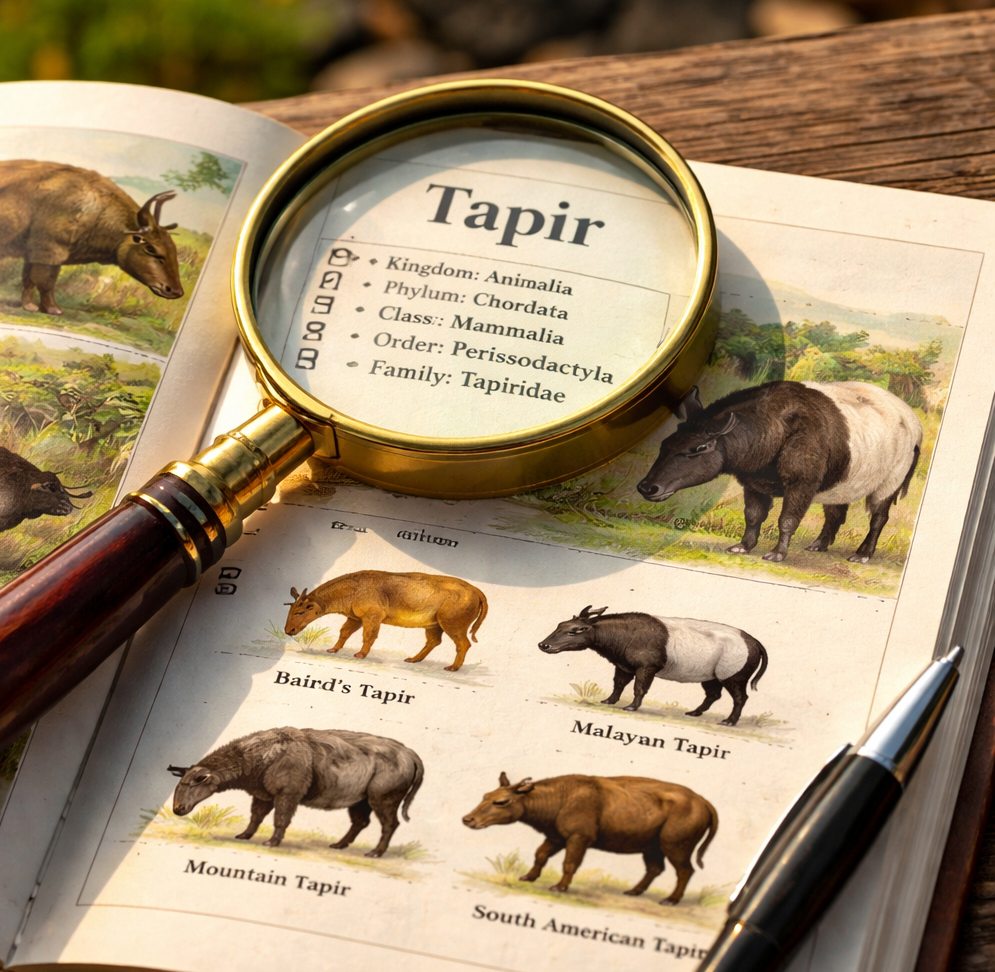
The mountain tapir, smaller in size and covered in dense fur, thrives in the Andes’ cold high-altitude environments. This variety of habitat occupation across species underscores their ecological versatility and the importance of customized conservation strategies.
Challenges faced by tapirs
Despite their evolutionary success, tapirs are vulnerable to numerous threats. Habitat loss due to logging and agriculture, coupled with hunting pressures, pose significant risks. Tapirs’ low reproductive rate exacerbates these threats, making conservation efforts crucial. Tapirs generally have lengthy gestation periods and produce only a single offspring at a time, meaning population recovery can be slow unless proactive measures are in place.
Conservation efforts and their importance
With the ongoing threat of extinction looming for many tapir species, conservation efforts are vital. Protecting habitats, preventing illegal hunting, and promoting awareness are key strategies. Organizations worldwide are focusing on creating protected areas and fostering community engagement to ensure these remarkable creatures remain a part of our ecosystem. Community-based conservation initiatives often involve local populations, encouraging sustainable land-use practices that benefit both humans and wildlife. By understanding the role that tapirs play in their ecosystems, these programs aim to balance ecological health with human needs.
Understanding their classification highlights the biological importance of tapirs and the need to preserve their diversity. Learning how they’re classified isn’t just about memorizing categories but appreciating the role they play in their environment and the greater animal kingdom. Efforts to document and study tapirs’ habits and habitats provide a clearer picture of what is required to maintain biodiversity, reflecting the broader global movement to protect our natural world.