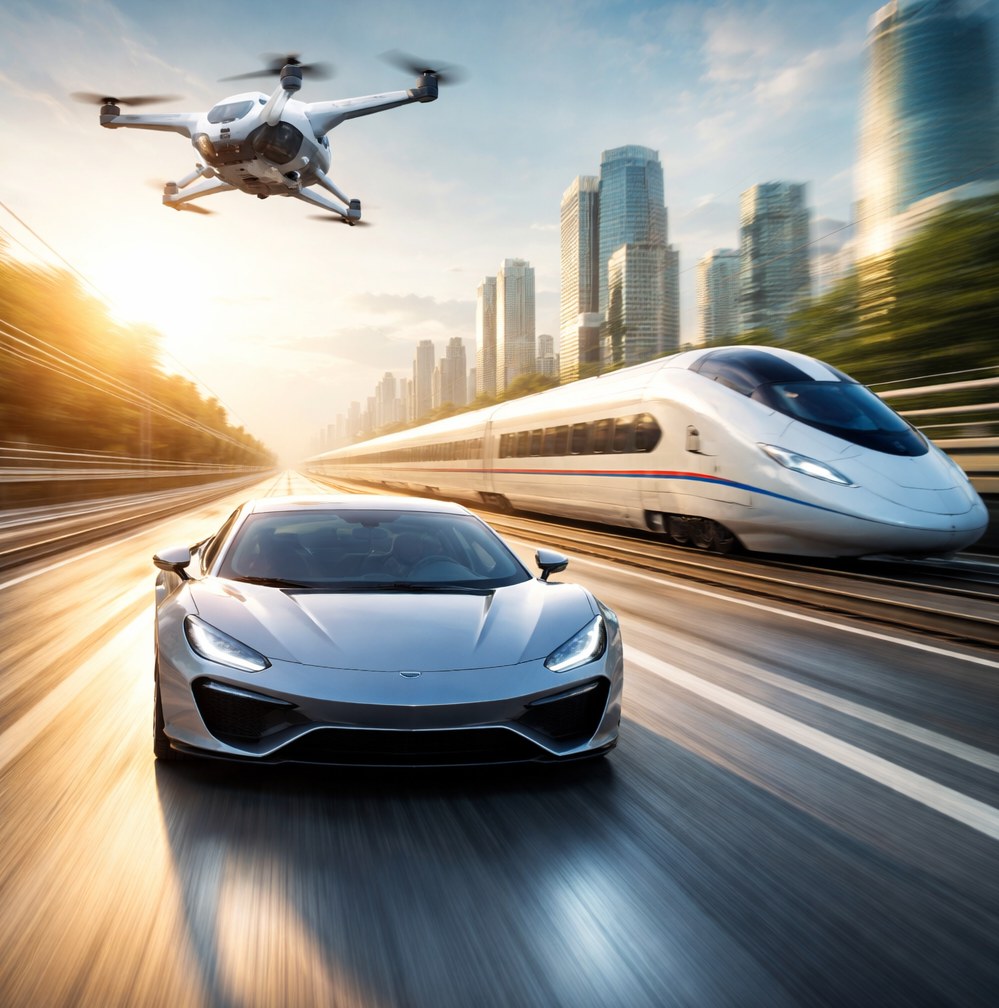

High-speed technology is reshaping our world, catapulting us into an era where distance and time are mere inconveniences. From hyperloop systems to next-gen maglev trains, advancements in transportation are not just about getting from point A to point B faster—it’s about transforming economies, bridging communities, and redefining our interactions with the world.
The Future of Transport is Fast
The hyperloop, a term coined by tech visionaries, refers to a sealed tube or system of tubes through which a pod may travel free of air resistance or friction, transporting people or objects at unprecedented speeds. Imagine speeds over 700 miles per hour, potentially making it faster than a commercial flight. This innovation isn’t merely science fiction—it’s a burgeoning reality with several prototypes and experimental tracks already in development.
Complementing these advancements are magnetic levitation—or maglev—trains. Using powerful magnets to lift and propel the train forward, maglev trains eliminate the friction and noise associated with conventional rail. Countries like Japan and China are pioneering these systems, with some trains already achieving speeds beyond 300 miles per hour in commercial settings. The potential for wider adoption is vast, offering a smoother, faster, and more energy-efficient transport option compared to traditional rail.

Urban Mobility Revolution
The impact of high-speed technology isn’t limited to intercity travel. Urban areas are also seeing a surge in innovative mobility solutions. Electric scooters and bikes provide eco-friendly alternatives to short car trips, and autonomous vehicle technology promises to reduce traffic congestion and enhance safety. With the integration of real-time data and AI, smart cities can optimize traffic flow, reduce emissions, and offer seamless connectivity between different modes of transportation.
Beyond Speed: The Economic and Environmental Impact
While speed is an enticing factor, the broader implications of high-speed transport are transformative. Economically, faster transportation can shrink geographical disparities, making remote areas more accessible and attractive for investment. This can lead to more evenly distributed population growth and economic development, reducing the burden on overcrowded urban centers.
Environmentally, high-speed trains like the maglev offer a cleaner alternative to air travel. With fewer emissions and lower energy consumption, these technologies could play a crucial role in combating climate change. The hyperloop, with its potential for energy efficiency, could further revolutionize how we think about sustainable travel. Moreover, the reduced reliance on fossil fuels aligns with global efforts to transition towards greener energy sources.
Challenges on the Track Ahead
Despite their promise, these technologies face significant challenges. Infrastructure costs are immense, requiring substantial initial investment from both public and private sectors. Regulatory hurdles must be addressed, with safety standards and technological frameworks needing to be established and harmonized globally. Public acceptance is another hurdle—people need to trust new technologies before they are willing to adopt them.
Yet, the momentum is undeniable. As these systems become more viable and publicly supported, the pace of development is likely to accelerate. Cities and countries that embrace these technologies could find themselves at the forefront of a new age of human mobility, reshaping everything from urban planning to international trade.
A Journey Worth Taking
In this rapidly transforming landscape, staying informed and adaptable is crucial. These technologies hold the promise of not just speeding up travel, but fundamentally changing our relationship with space and time. As we continue this journey into a high-speed future, the potential benefits are enormous for individuals, communities, and the planet.